Life Trockenrasen: Hoopoe


Hoopoe
If you're exploring dry grasslands in early spring, take a moment to listen. With some luck, you might hear the first "hoo-poo-poo" calls of the hoopoe, which returns from its wintering grounds in southern Africa at the end of March.
The Punk among the Birds – Appearance
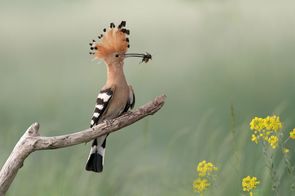
With its six-centimetre-long beak, orange-brown plumage, and distinctive crest, the hoopoe is one of the most striking native breeding birds. During courtship, it often raises its impressive crest, making it look like a punk.
Hoo-poo-poo – Song and Mating
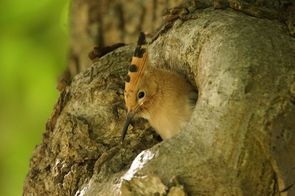
Its song is unmistakable: a low, three-syllable "hoo-poo-poo," often sung by males from a perch during courtship. After mating, the female lays five to eight eggs. The nests are typically located in old woodpecker holes, knotholes, or wall crevices. In some of our project areas, nesting aids have been installed. While the female incubates the eggs, the male is responsible for providing food.
Foraging in the Soil – Behavior
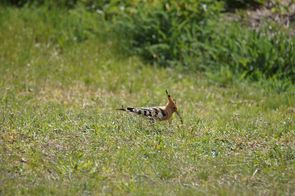
The hoopoe's diet includes beetles, grasshoppers, earthworms, and snails, which it picks from the ground or probes for in the soil with its beak. It requires open, structured habitats with a rich insect population, making dry grasslands an ideal environment. However, as these habitats have become increasingly rare, the hoopoe is now listed as an endangered species. Across Germany, there are only about 800 breeding pairs. In Brandenburg, however, the population is on the rise. This heat-loving species appears to be benefiting from climate change, provided it finds suitable habitats and nesting sites.
Defence Against Predators – Behaviour when in Danger
To protect itself from predators like birds of prey, the hoopoe adopts a camouflage posture when escaping is no longer possible. It spreads its wings and flattens its tail, remaining motionless. Thanks to its plumage, it becomes nearly invisible. If the nest is threatened, the female and chicks release a foul-smelling secretion, giving rise to the German saying “Du stinkst wie ein Wiedehopf (you stink like a hoopoe).
Off to Africa – Migration
The hoopoe spends the cold months in Africa, wintering south of the Sahara.

Das Projekt LIFE Trockenrasen
Die Stiftung NaturSchutzFonds Brandenburg realisiert gemeinsam mit dem Botanischen Garten der Universität Potsdam und der NABU-Stiftung Nationales Naturerbe von 2019 bis 2026 das Projekt "LIFE Trockenrasen". Mit dem Projekt werden wertvolle Trockenlebensräume im Land Brandenburg geschützt, erhalten und wiederhergestellt.
Ansprechpartnerin:
Janine Ruffer (Projektleitung)
E-Mail schreiben